
Issue #30: Loops
Hiking offsites and other failures.

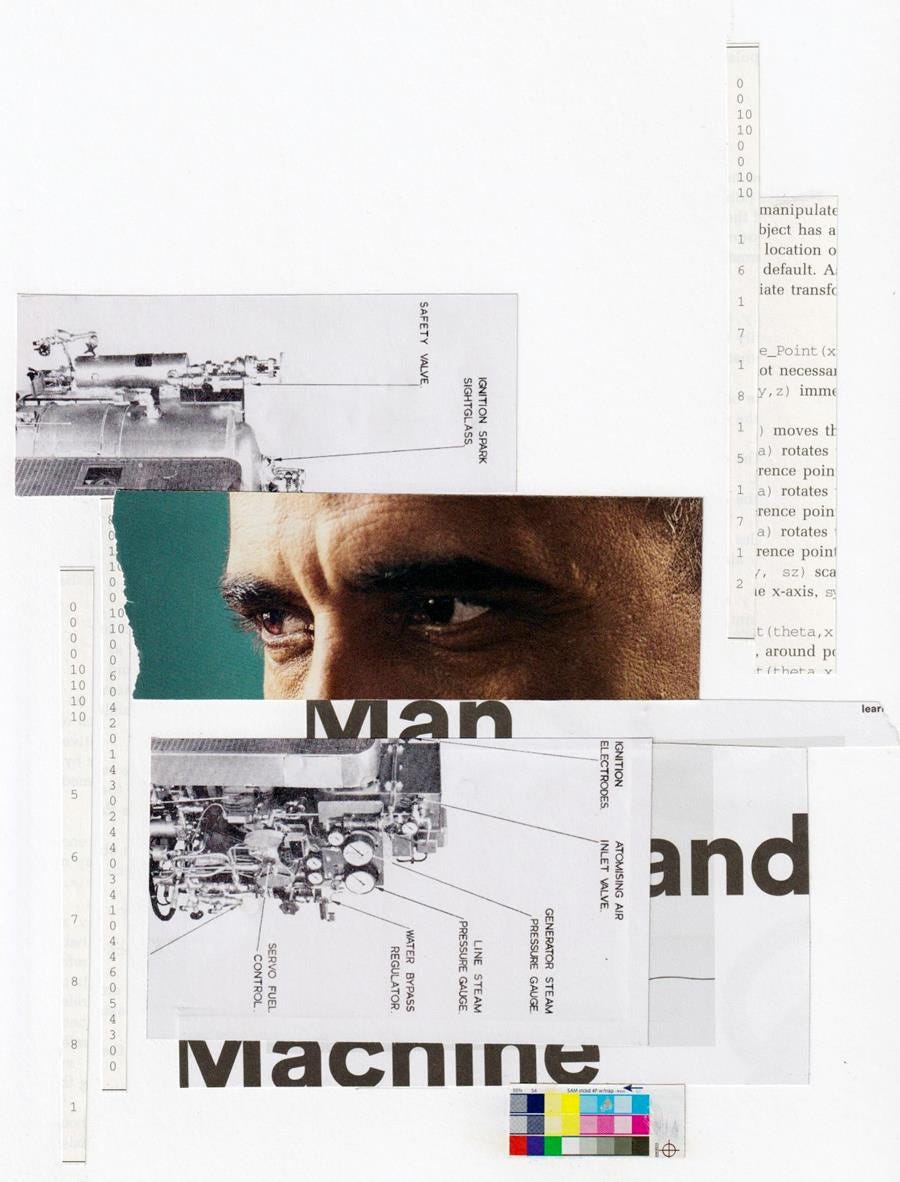
Five things this week. A short and sweet edition. I’m taking next week off for the Easter break. Because sometimes it’s nice to go outside, breathe the air, not look at a screen.
Listen: Shell Game
I blitzed through the second season of Shell Game this week. Evan Ratcliff set out to create a million-dollar startup just using AI agents. I laughed out loud at the part where the agents get stuck in a loop organising a hiking offsite in Northern California.
Evan is a journalist, so part of the motivation was to investigate the gap between what AI companies claim agents can do and what they actually can. But he has been a startup founder, so this isn’t a piece of gotcha journalism. If you’re being sold AI learning agents as a solution, this is a useful frame for understanding what is and isn’t possible.
Notes: The boring parts have the most value
In edtech, automating behind-the-scenes workflows (think moving between stages of content production, signoff, QA) is far more useful than image generation and voice agents. These are the human processes that cause product roadmap delays. Overclock has been getting a lot of buzz from the ex-Trilogy crowd this week. It’s a 10-week accelerator to build workflows and integrate tools. We’re starting to see learning products coalesce around specific use cases.
Consider: Designing learning experiences with voice
Learning design is no longer just about video, text, and live instruction. Designers can now choose how a user interacts with their product in a way they couldn’t before – across text, voice, image, video, documents, or some combination of each. Last week, Google’s Stitch agent showed what it looks like to talk to an infinite canvas. Crucially, I think, speaking out loud and reflecting on what you’ve learned can be done away from the screen.
Consider: Create the shitty first draft yourself.
From Anthropic’s jobs page, but good advice for any learner: “Please create your first draft yourself, then use Claude to refine it. We want to see your real experience, but Claude can polish how you communicate about your work.”
In other words, don’t use the tool to create. Use it to edit. Some things I’ve found useful recently, ask Claude to edit your essay like a Condé Nast copywriter, or pick it apart like a fact checker from The New Yorker. Ask Claude where you can tighten the phrasing. It’s great for this. Less good when you want it to sound like you. Otherwise else all your thoughts just sound like this:
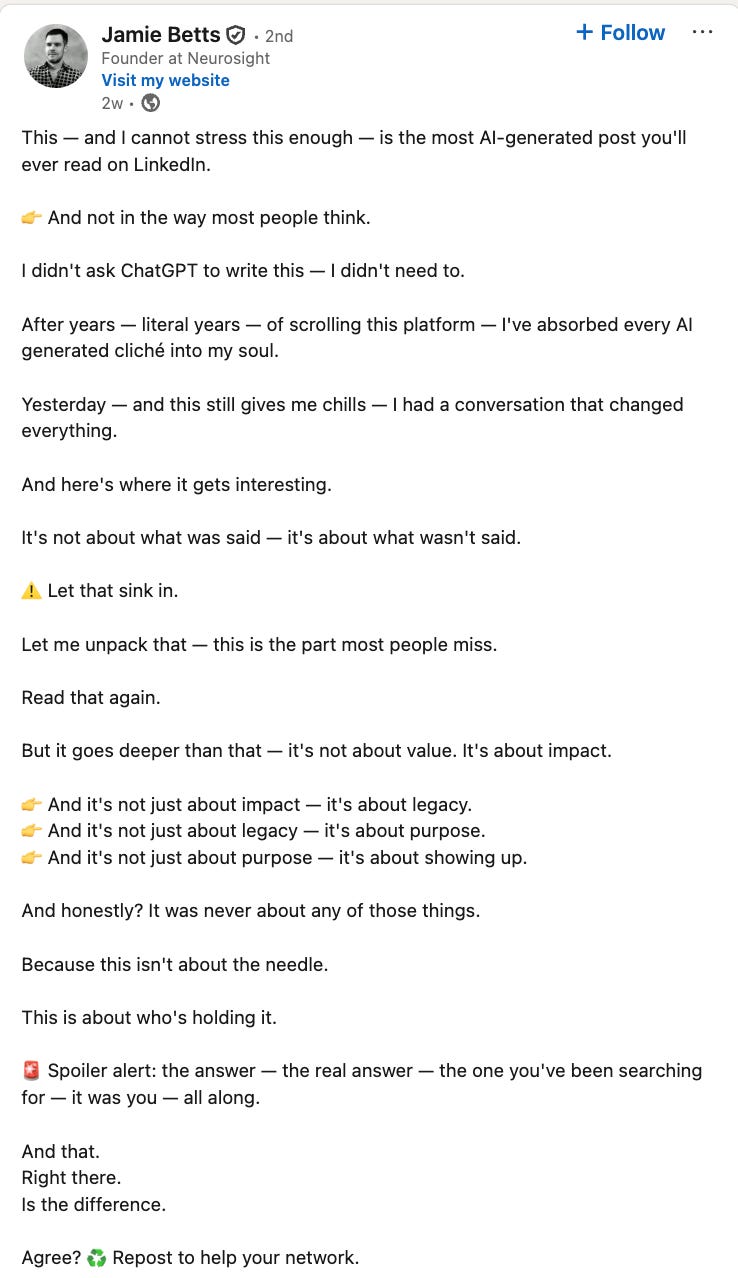
I feel seen.
Waitlist: Live forever as a machine.
Sentience seems likely to attract a fair amount of controversy. The premise is the tool collates your entire digital life and creates an AI that “thinks like you, retrieves what matters, and acts on your behalf.” I’m sure this won’t go wrong. Still, I’ve signed up for the waitlist as it feels like it could help create lesson plans faster, based on my context and knowledge. Which is a slippery eel of a thing I’m always struggling to pin down.
One more thing.
EdTech is going through a transition period. Particularly in workforce learning, away from the cohort-model of the last decade, to something new. Where it ends up is still a mystery. For some, it’s AI tutors for everyone, for others, it’s a focus on in-person, experience-based learning. For others, well, it’s selling the same thing that worked yesterday with a greater intensity. But there is a continuous search for something better that is just around the corner. Thich Nhat Hanh put it better than I can:
“You want to find something, but you don’t know what to search for. In everyone there’s a continuous desire and expectation; deep inside, you still expect something better to happen. That is why you check your email many times a day.”
- Thich Nhat Hanh.
See you in a couple of weeks.